My brother in law spent an entire barbecue last summer building a fire pit out of the leftover bricks from his patio job, the ordinary red ones, the kind you’d use for a garden wall, and I stood there with a beer not saying anything because it felt rude to ruin his afternoon. Twenty minutes in, one of them made a noise like a gunshot and a chunk of it landed about a foot from his youngest’s trainers. Nobody was hurt. Everyone was quiet for a second. He carried on like it hadn’t happened, which is very him, but I went home and actually looked into why that happens, because I’d genuinely wondered the same thing about my own garden for about two years and never bothered checking.
So here’s the actual answer, formed properly, not the hedge you get from a forum thread where everyone contradicts each other and someone posts a photo of their pit that’s “been fine for years.” No, you shouldn’t use regular bricks for a fire pit. And I don’t mean “technically you can but,” I mean it’s a genuinely bad idea and I’ll tell you exactly why, because the reason matters more than the rule.
Why the brick itself is the problem, not the fire
Ordinary bricks, the standard clay ones used for walls and patios, are made with moisture still sitting inside their structure.
Not visible moisture, not “it rained on them” moisture, it’s baked into the material itself at a molecular level, trapped in tiny pores throughout the brick.
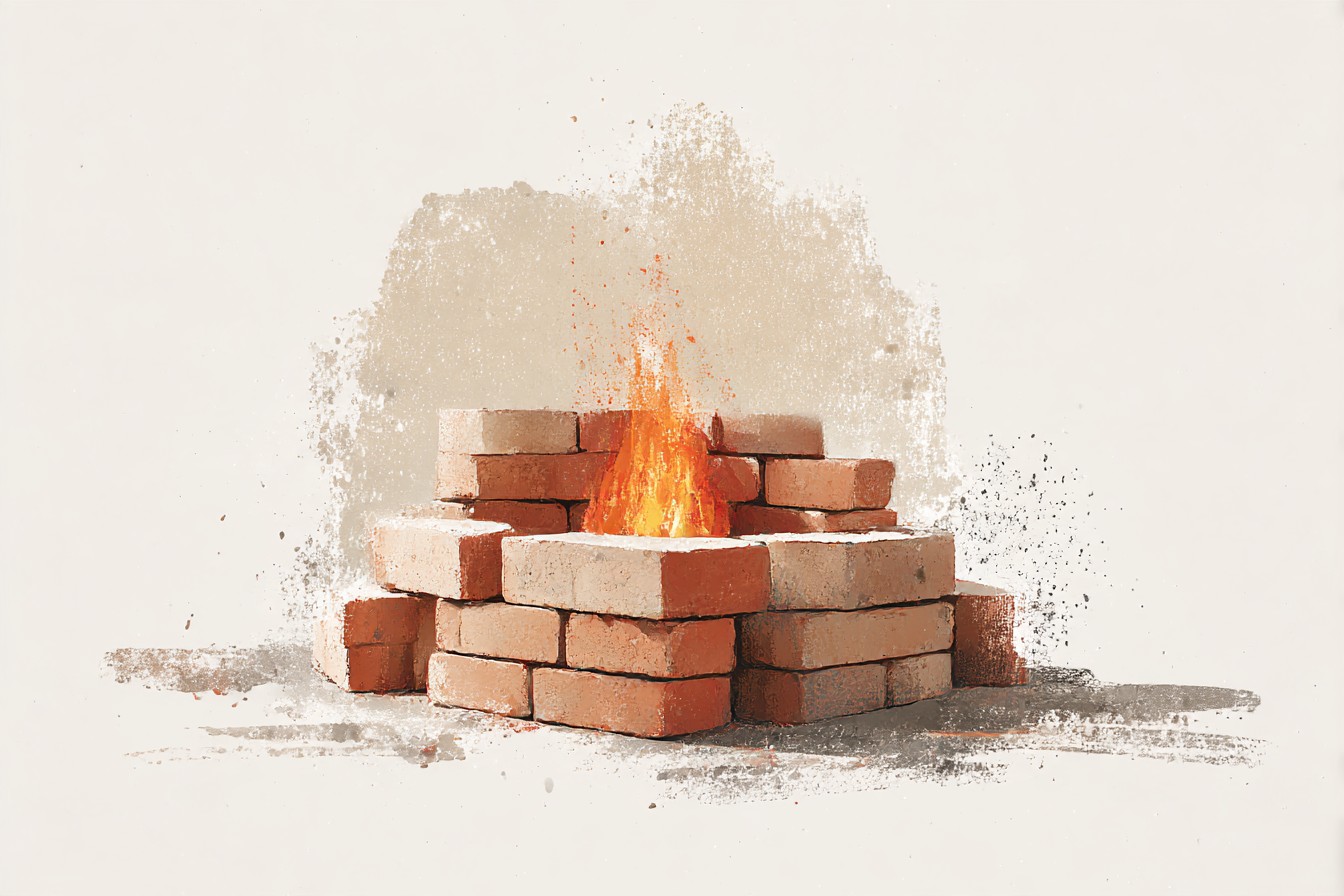
When you heat that brick gently, low oven temperatures, warm sunshine, that moisture does nothing dramatic. When you heat it fast and hot, which is exactly what an open fire does, that trapped moisture turns to steam faster than it can escape through the brick’s surface. Steam needs somewhere to go. If it can’t get out gradually, it gets out violently, and the brick fractures or explodes to make room for it. That’s what happened at my brother in law’s barbecue, that gunshot crack was a chunk of brick physically failing under internal pressure, not the fire “damaging” it in some slow cosmetic way.
Fire bricks, the ones actually rated for this job, are made differently on purpose. They’re fired at much higher temperatures during manufacture, which drives out most of that internal moisture before it ever reaches your garden, and they’re made from a denser, more thermal shock resistant clay that can handle rapid heating and cooling without cracking. This isn’t marketing dressing to justify a higher price, it’s an actual structural difference you can’t see by looking at the brick, which is precisely why so many people get caught out. A regular brick and a fire brick look basically the same sitting in a pile at the builders’ merchant. You cannot eyeball the difference.
You Might Also Like

You find out the difference the hard way, at head height, near your kids.
And I want to be honest about the bit that actually annoys me most, which is that some regular bricks do seem to survive for ages.
My brother in law’s pit had been going for three barbecues before that one failed. That’s the trap. It’s not that regular bricks always fail immediately, it’s that they fail unpredictably, and “unpredictably, near an open flame, in a garden where children run around” is not a risk profile I’m willing to sign off on for the sake of not buying the right bricks.
What I’d actually tell you to do instead
If you’ve already built a fire pit out of regular bricks and it’s been fine so far, I’m not going to pretend that’s some ticking bomb you need to demolish tonight. But I would stop using it for anything more than a small contained flame, and I definitely wouldn’t build the next one the same way, because now you know what you didn’t know before, and continuing to gamble on it feels different once you’ve read the actual reason rather than just a warning.
Proper fire bricks aren’t expensive in the way people assume. You’re not paying triple for the privilege, you’re paying a bit more per brick for the manufacturing process that actually makes them suitable for the one job you’re buying them for. I priced it out for my own garden after that barbecue and the difference for a decent sized pit came to less money than the bag of charcoal and lighter fluid I’d bought that same week, which put it in perspective fairly quickly.
The other option, if you want the look of a rustic brick pit without buying specialist material, is a metal fire pit insert or liner sat inside a brick surround, where the bricks are decorative and structural for holding shape rather than the thing actually taking the heat. That’s a genuinely good compromise and it’s what I ended up doing, mostly because I already had bricks left over and didn’t want to waste them, and my eldest thinks the metal ring “looks like a proper campfire,” which was accidental but I’m taking the win.
I’m not going to pretend this is a complicated verdict dressed up as a long one. Regular bricks trap moisture, fire turns that moisture to steam, steam finds a way out whether the brick likes it or not, and I’d rather spend the extra few quid than find out which one of my bricks decides to make its point at head height while the kids are stood round it eating sausages.