Ok, time for me to drop a little truth bomb on you guys that’s going to really piss some people off: most farmhouse bathrooms that I see drive me up a wall. Seriously. You walk into someone’s home, and there are the same hokey-ass galvanized metal signs that B&Q sells in packs of twelve, dollar-store faux mason jar soap dispensers, and distressed wood that has never been distressed by weather or time – just a beating from some drill operator’s sander.
Farmhouse chic became more of a checklist rather than…you know…an aesthetic. I know these things because when I tried to decorate my first farmhouse bathroom, I killed it. When I first moved into my last flat, my bathroom was coated in what I can only describe as generic flat beige, and I was so desperate to make it feel different that I went TOO HARD in the other direction.
Next wire baskets? CHEQUE.
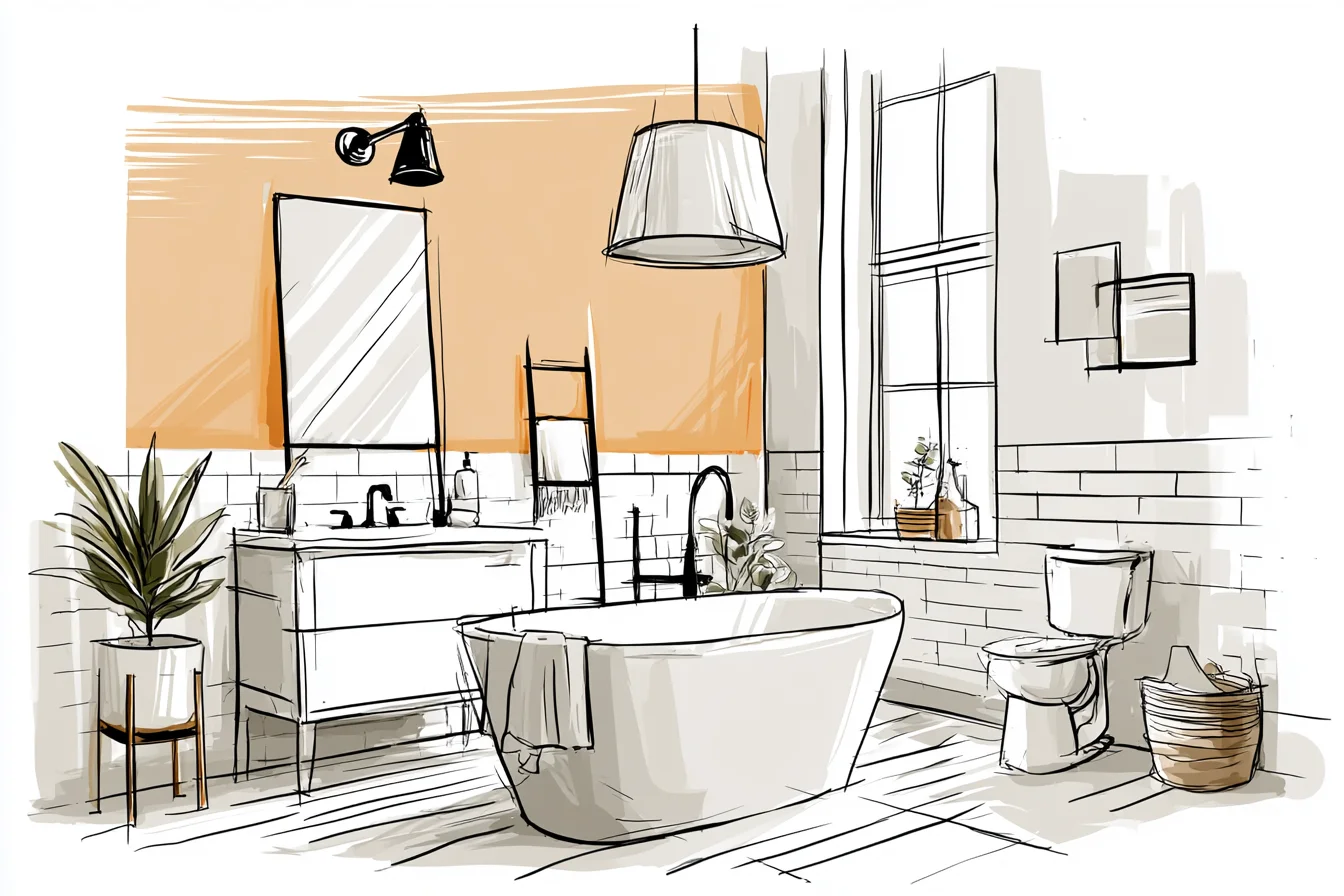
Enamelware fruit bowls I snagged off some “rustic living” website?
CHEQUE. Yeah, that wooden ladder that was supposed to be a towel bar but is so flimsy you can’t actually grab a towel when you need one urgently (like every five seconds in a bathroom)? CHEQUE.
Walking into my own bathroom felt like I had Photoshop’d a room straight from a catalogue. No personality. Nothing felt earned.
When I truly understood what farmhouse style was, was sort of accidental. My friend Sarah was helping her grandmother gut and renovate her childhood home up in Derbyshire. She asked me if I wanted to come up for the weekend and help her rip down old wallpaper, and while we were working, I was sort of just taking in the bathroom.
It had the original tile – authentic 1940s subway style with gorgeous crazing in the glaze from a century of heat and cold, a cast iron clawfoot tub with lovely rust stains that had YEARS of story behind them, and beautiful wide plank floors so worn down from generations of bare feet that they felt like butter under my own socked feet. I realised something in that moment staring at all that history: farmhouse wasn’t buying weathered wood. Farmhouse was wood that had actually BEEN weathered for decades.
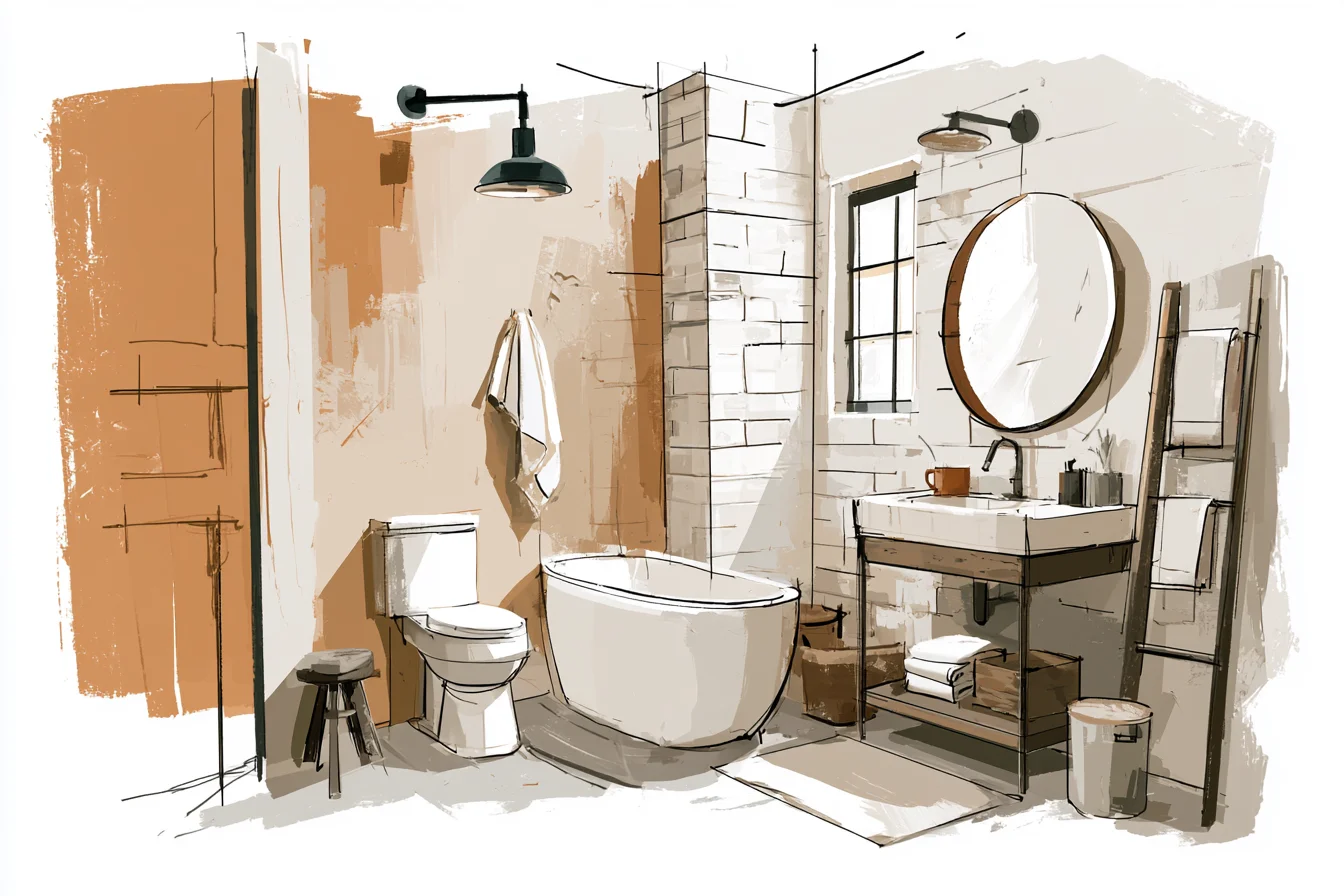
I changed my whole mentality about decorating from that trip onward. Rather than buying things marketed as “farmhouse-style” inspiration, I focused on finding pieces with soul and history. The medicine cabinet you see here was picked up at an estate sale in Stockport – a classic 1950s vintage piece with the original mirror which has these lovely silver spots where the backing has begun to wear off around the edges.
It isn’t perfect by any stretch, but it has character you can’t replicate. Materials became something I obsessed over. Real shiplap – not the tongue-and-groove that “everyone” passes off as “shiplap” nowadays – has very distinct proportions to the boards, and a way that they meet at the seams you just can’t replicate with knock-off boards.
I spent months digging through salvage yards and architectural re-use places until I finally stumbled across REAL shiplap – from the renovation of an early 19 twentieth-century barn in Yorkshire. It was expensive. Like, twice what I would have spent on new boards expensive.
But every nail hole and speck of patina was a whisper of history you just can’t get from sanding down new lumber. For non-shiplap walls, I used lime wash rather than traditional emulsion. Lime wash has this incredible depth to it, and the texture actually shifts throughout the day as different angles of light hit it.
Oh, and it’s naturally antibacterial. Our great grandparents knew that before fancy bleach bathroom cleaners existed. It is a pain in the arse to apply, however.
Lime is drying and dusty, and I felt like I had ghost demon babies crawling under my fingernails for a good two weeks after hanging. But if you want that true farmhouse look of depth and history? Lime wash is the way to go.
You Might Also Like
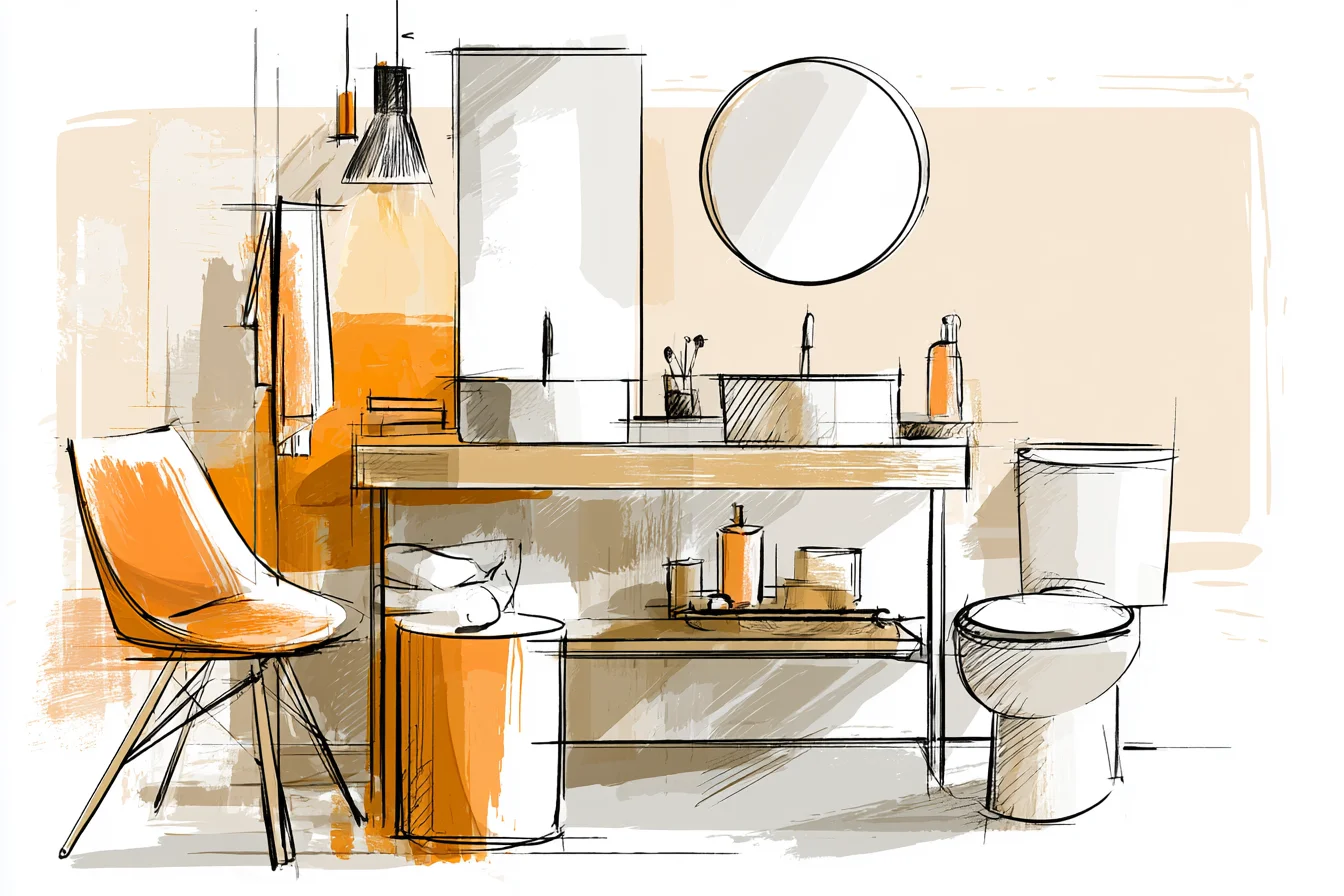
Obsessing over natural materials is KEY when you’re going for that authentic farmhouse feel. I found reclaimed heart pine for my vanity top, and sealed the fuck out of it with about four coats of marine grade poly – trust me, if you don’t seal reclaimed wood in the bathroom, you’ll regret it. The humidity WILL destroy you faster than you can say “ expensive hobby.” A lot of people are afraid of using wood in bathrooms, but REAL reclaimed timber can actually develop the sweetest patina over YEARS of use.
If your taps and fixtures look too “ shiny,” you’ve gone wrong. I originally impulse bought this “farmhouse-style” tap from one of those influencer-laughingstock brand everyone sees everywhere and well… It looked TOO new. Too perfect.
I ended up finding this restored 1930s bridge tap on eBay from a Scottish seller who specializes in vintage plumbing. My plumber had to do some tweaking to get it to install correctly, but man, is the brass gorgeous. That kind of natural patina you will never find in anything sold in a store.
Almost EVERYONE gets lighting wrong when they’re doing farmhouse bathrooms. You know those ubiquitous mason jar pendant lights that are fucking everywhere? Hate them.
Thoroughly and deeply. I understand the appeal – they’re affordable and easy to DIY, but mason jar lighting like that aren’t remotely authentic to farmhouse style. Practicality came FIRST with old-time farmhouse lighting, and while something looked nice, it was a bonus.
I hung this restored porcelain industrial-era fixture from the 1940s that originally hung in a factory somewhere as my main bathroom light. The lines are gorgeous and simple, and feels incredibly at home in a bathroom. As for my vanity lighting, I found these vintage milk glass schoolhouse fixtures that give the absolute best, most flattering light I’ve ever had.
Lastly, your storage solutions shouldn’t LOOK STAGED. My towel / bathroom linen storage is a mish mash of old, used things that don’t quite match – An old wooden apple crate I’ve thrown rolled towels into, a legit galvanized washtub with rust and divets from years of use storing my cleaning supplies under the sink, and I snagged this old 1950s feed sack that makes for THE CUTEST laundry bag. Having things that don’t match is what makes it feel authentic.
Speaking of authentic, THE MIRROR. Please please please please please spend the extra time/searching for the right mirror to hang above your sink. It really sets the entire room’s tone.
I found this gem at a flea market in Altrincham – a classic 1930s mirror with a pretty ornate, but simple frame that’s lost bits of the silver backing along the edges. Those chips catch sunlight in the most interesting ways, and add depth you just don’t get with a new mirror. Window coverings should befunctional, not fancy.
Hang something as simple as linen curtains on a rod made of reclaimed pipe.
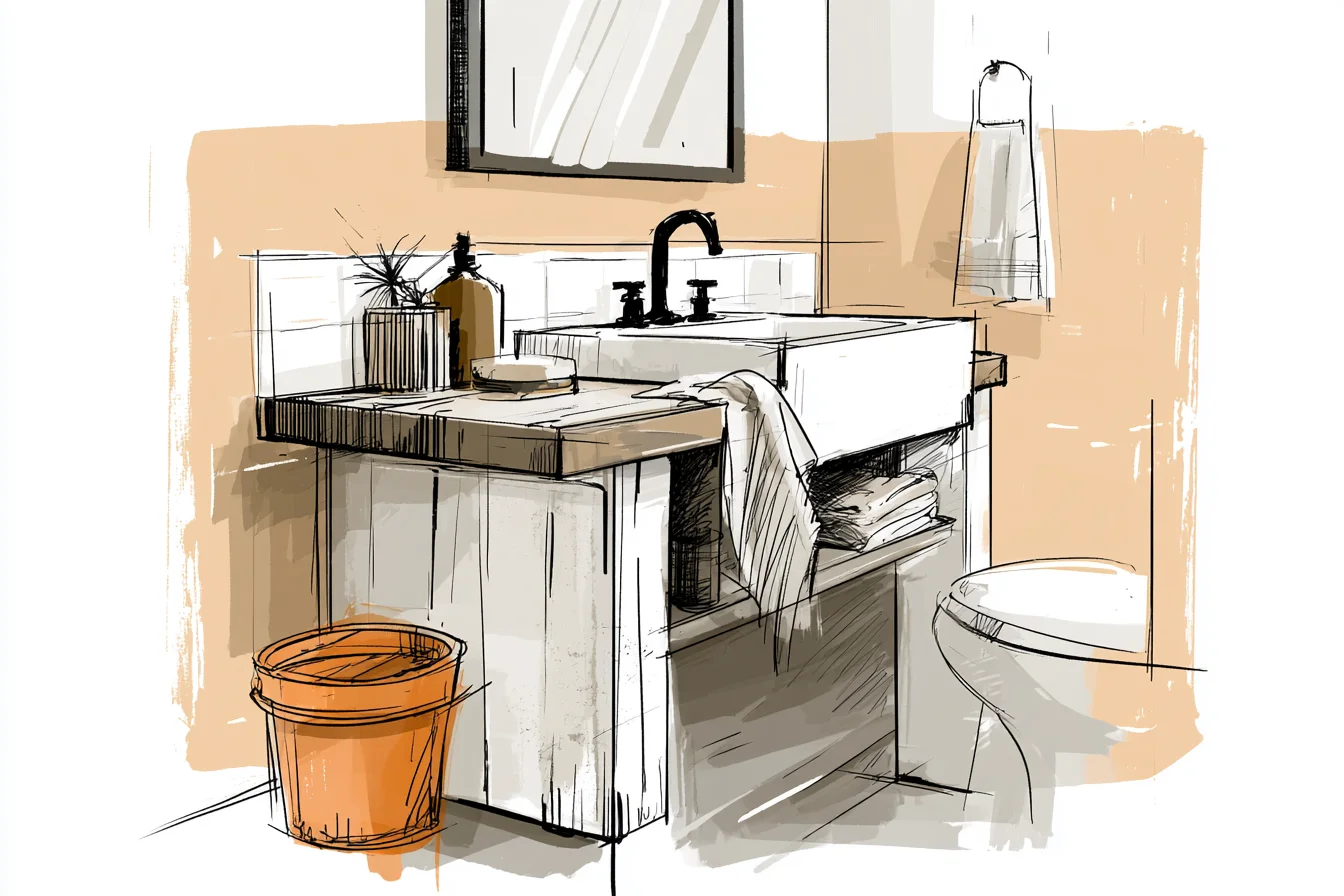
Linen will only get softer and more beautiful with each wash as it develops that “lived in” feel naturally. Avoid anything too flowery or decorative.
And for the love of all that is holy, put some plants in your bathroom. Stick with ones that actually LIKE humidity – I have pothos, a snake plant, and this spider plant that’s been passed down from one my grandmother owned for nearly thirty years. Keep them in vintage crockery wherever possible.
It doesn’t have to match, it just has to have lived there for awhile. TLDR? DON’T OVER THINK IT.
If something feels forced or like you just went out and bought it to match the farmhouse “theme” you’re going for, don’t buy it. Spend the time scouring yard sales / estate sales / flea markets for pieces with history. Your bathroom should feel like it has stories to tell, not like it was installed yesterday.