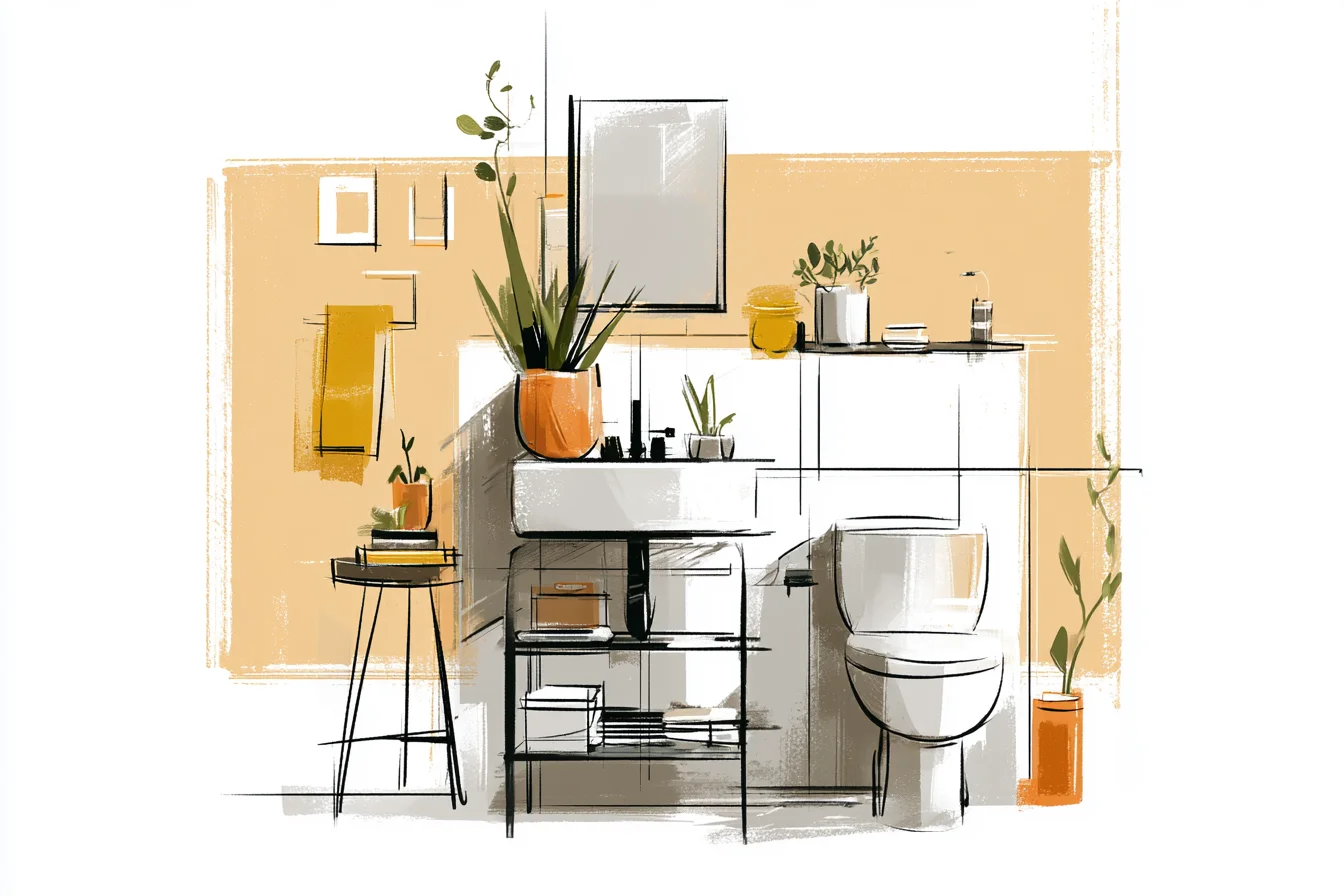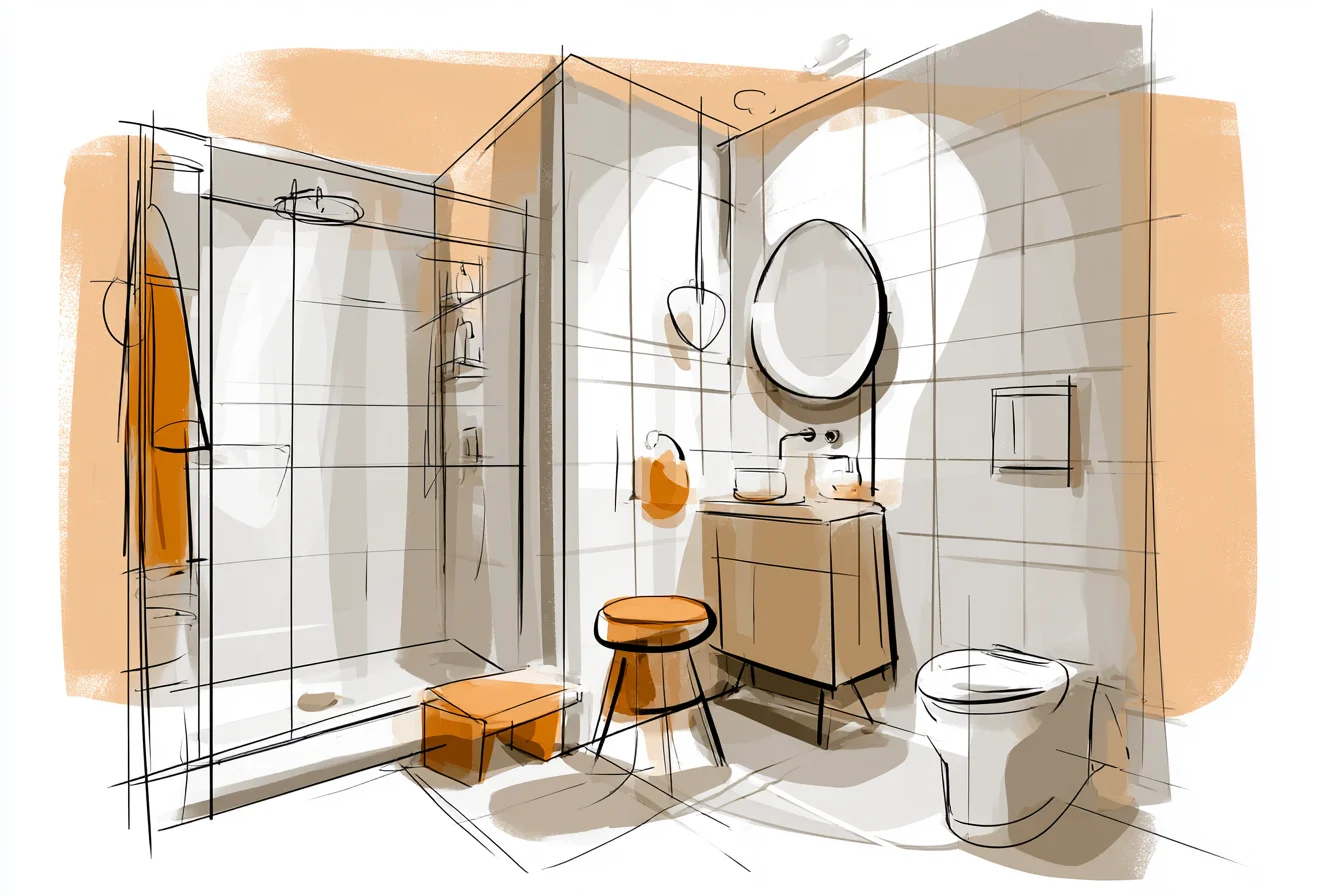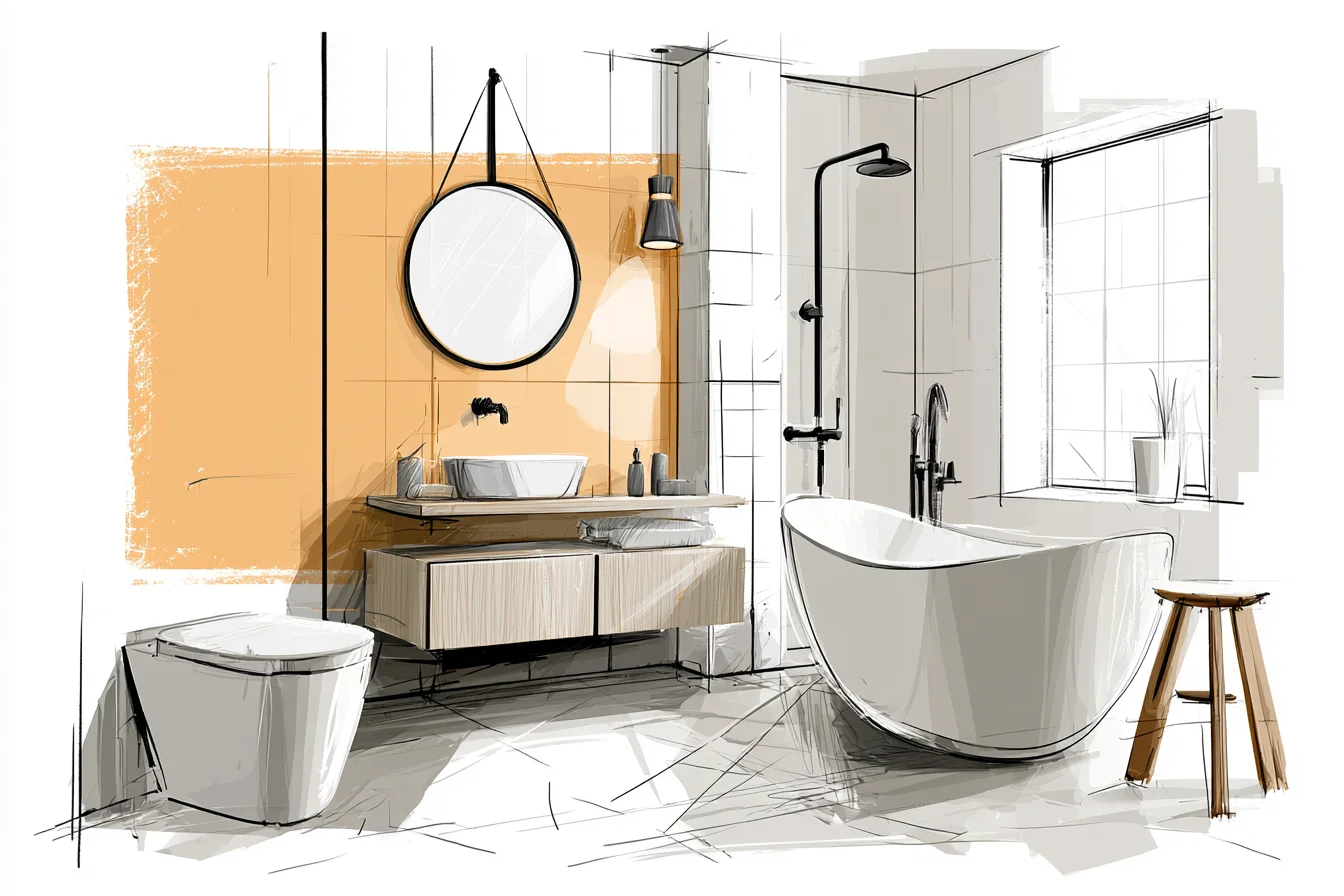
Walking into each bathroom in my house three years ago was like time-travelling to different universes. The guest bath was peppered with tacky salmon-coloured tile that made guests appear jaundiced. The master bathroom upstairs suffered from bland beige builder-grade paint on the walls, beige sink and tub fixtures, and beige grout that had yellowed with age.
And let’s not even discuss the powder room whose only redeeming quality was ample storage but featured an electric blue accent wall. Despite how different they were from each other, I knew I wanted each bathroom to have something in common. I craved continuity when walking through my house, but I didn’t want every room to look like wallpaper cut-outs of the same scene.
Instead, I decided I wanted grey as a through-line for each bathroom throughout my home. Grey.
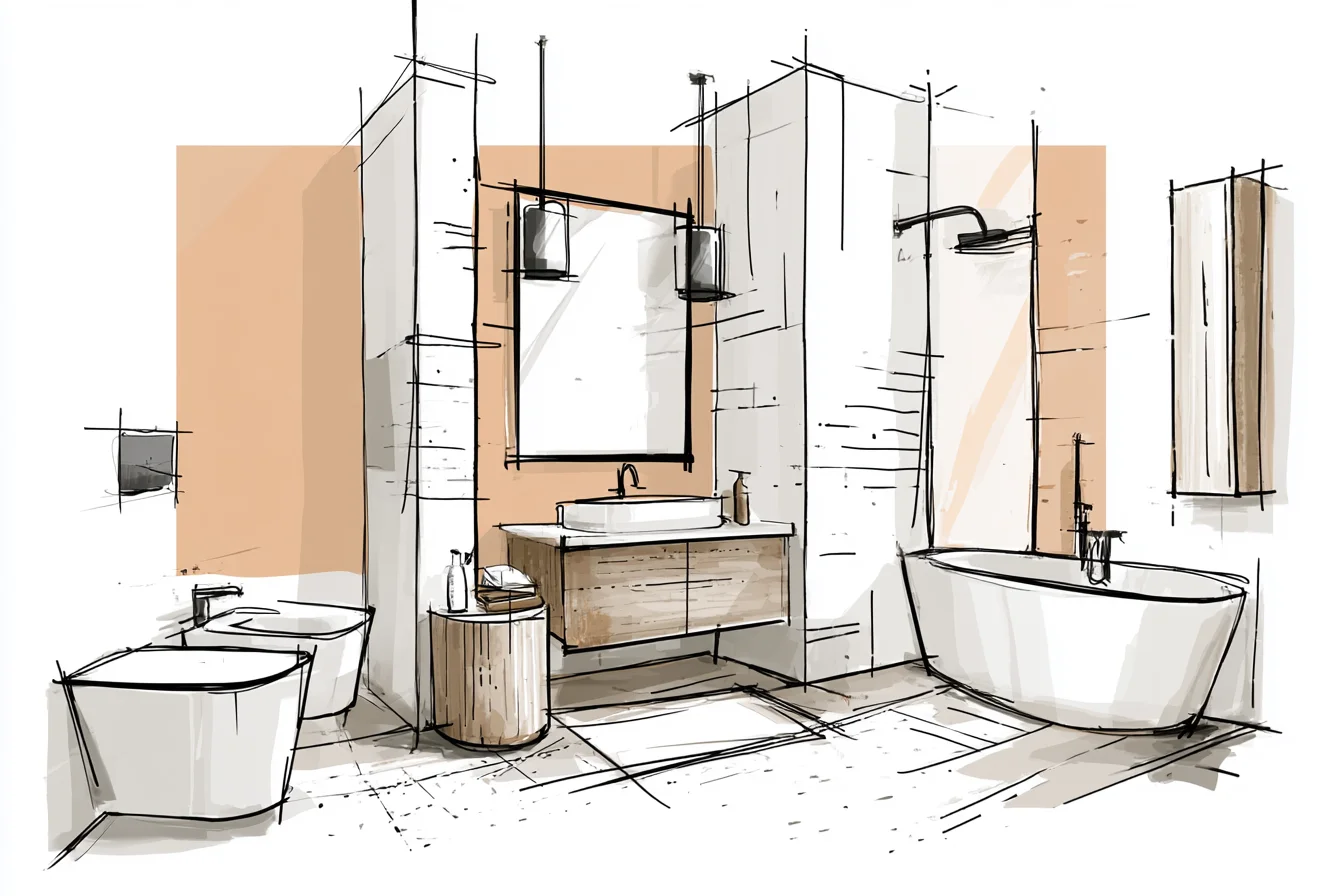
Sneaky grey.
Most people hear grey and automatically think boring. But here’s the secret about grey that not everyone realizes: it comes in countless shades that range from cool to warm, and light to dark. Rather than limiting my colour options, choosing a neutral as my foundation actually opened up the possibilities of what I could do with each bathroom.
Here’s how I did it. I started with the guest bathroom. Armed with paint chips from the hardware store, I pressed them up against the existing salmon tile until I found a warm grey with just a hint of beige to it that made me feel like I could leave the pink walls intact.
With white accessories like towels and rugs, this corner bath came to life overnight. I decided to go with Benjamin Moore’s “Classic Grey” paint colour. It’s warm with just a hint of beige underpants to work with what I already had in place.
I can’t replace my guest bathroom fixtures overnight, and I wasn’t ready to gut the entire room just to repaint. Classic Grey was the perfect solution. Painting those pink walls grey instantly improved the space.
Adding white towels and curtains helped tie the room together. It went from tornado wreck to relaxing retreat in less time than it takes most of my projects to get started. I took a similar approach to the master bathroom.
Instead of matching the exact shade of grey I used in the guest bathroom, I took it a step cooler with Sherwin Williams’ “Agreeable Grey” on the majority of the walls. Then, I created an accent wall behind the vanity with a darker shade of grey (Sherwin Williams “Dovetail”). The dark wall behind the vanity offset my white subway tile that I’d installed myself thank you very much.
It added depth and interest to an otherwise simple space. Even though all the bathrooms in my home are painted some shade of grey, they each have completely different vibes. In the powder room, I went with nearly charcoal grey (“Iron Ore” by Sherwin Williams) and brass fixtures I got on major sale at a kitchen and bath showroom that was going out of business.
Dark walls in a small space can feel closed-in and cold, but the warm brass keeps it from feeling industrial. It’s cozy and inviting. In the basement bathroom, I took a risk with a grey-blue hybrid (“Storm Cloud” by Sherwin Williams).
It looks cool and fresh during the day, but bathed in the warm glow of my LED lights at night, it transforms into a sleek, moody hue. It’s my favourite bathroom to splash into first thing in the morning. I love that grey creates continuity between each bathroom in my home, but because there are so many different shades, each bathroom can have a totally different mood or purpose.
It also blends with just about everything – from brass to stainless steel to wood – which gives me freedom to decorate with other colours or themes without worrying about everything clashing. Whether I wanted to go bold with turquoise tile like I did in my powder bath or stick to simple white walls and wood beams like in our basement bath, grey worked with every vibe I craved for that specific bathroom. Nope!
There are too many great grey options to limit yourself to one colour throughout your entire home. I used three different shades of grey in just the bathrooms of my home! If you pick a shade that’s too cool or warm, it can tint your skin green or make you look ill when you hop in the shower.
You Might Also Like
Plus, I find that matching the exact same colour throughout your entire home is boring. Instead, pick a shade that fits with the mood you’re going for in each bathroom. True story: I tried this when I painted my first bathroom grey.
I used too-light-for-my-taste grey in the guest bathroom. By the time I painted the master and bathrooms downstairs, I had three different shades of grey that were close, but didn’t exactly match. It ended up feeling very cheap and not at all cohesive.
Guests would walk from one bathroom to the next and notice right away that something was “off.” I didn’t realise it at the time, but each bathroom needed to have grey as a through-line rather than matching the exact same shade of grey. That’s why I paint paint chips everywhere I think I might paint! Once you find a grey you love, bring the paint chip with you to your bathroom and paint it directly on the wall.
Look at it in the morning when the light is natural. Does it look too blue? Too green?
You’ll see when you test it on the wall. AND DON’T FORGET TO SAMPLE IN BATHROOM MORNING AND NIGHT. Some paints look completely different when you first wake up versus when you’re getting ready to go to bed.
Invest in good LED lights that have adjustable colour temperature. Grey can look washed out or medicinal under bright white lights, so I tend to stick with warmer white LED bulbs that don’t create ugly shadows. I spend about $200 per bathroom on decent fixtures, but they make a world of difference when it comes to getting the perfect grey tone.
And when you spend as much time in the bathroom as I do, it’s worth the investment! Also, grey is super forgiving when it comes to laundry spills. Yes, even toilet paper mistakes!
Unlike pure white paint, grey can handle a watermark or two. Although, cutting your children off from the toilet paper supply as punishment is still a great repercussion if they toiletnado your bathroom floor. Just saying.
Since grey is such a neutral colour, it pairs well with every metal finish. Do you love the look of shiny silver hardware? Go for it.
Prefer brushed nickel?

That works, too. In my master bath, I paired grey walls with everything from basic white tile to brass fixtures to dark wood vanities.
Here are a few of my favourite hooks, cabinet pulls, and towel racks to get you started. Grey is basically the perfect background canvas to highlight pretty much any texture. Think about all the materials you’ll incorporate into your bathroom: tile, stone, metal fixtures, fabric shower curtains…they can all pop against a grey background.
I love adding different textures into my bathrooms to keep things interesting without weaving in twenty different colours. Another bonus of grey? When it’s time to upgrade your towels or spend too much money on Amazon purchasing fancy soaps, it’s easy to change out your accents with the seasons.
Add brighter colours in summer and rich tones in winter. The possibilities are endless! Want more hardware inspiration?
Cheque out my mega guide on how to shop for kitchen and bath hardware like a pro.