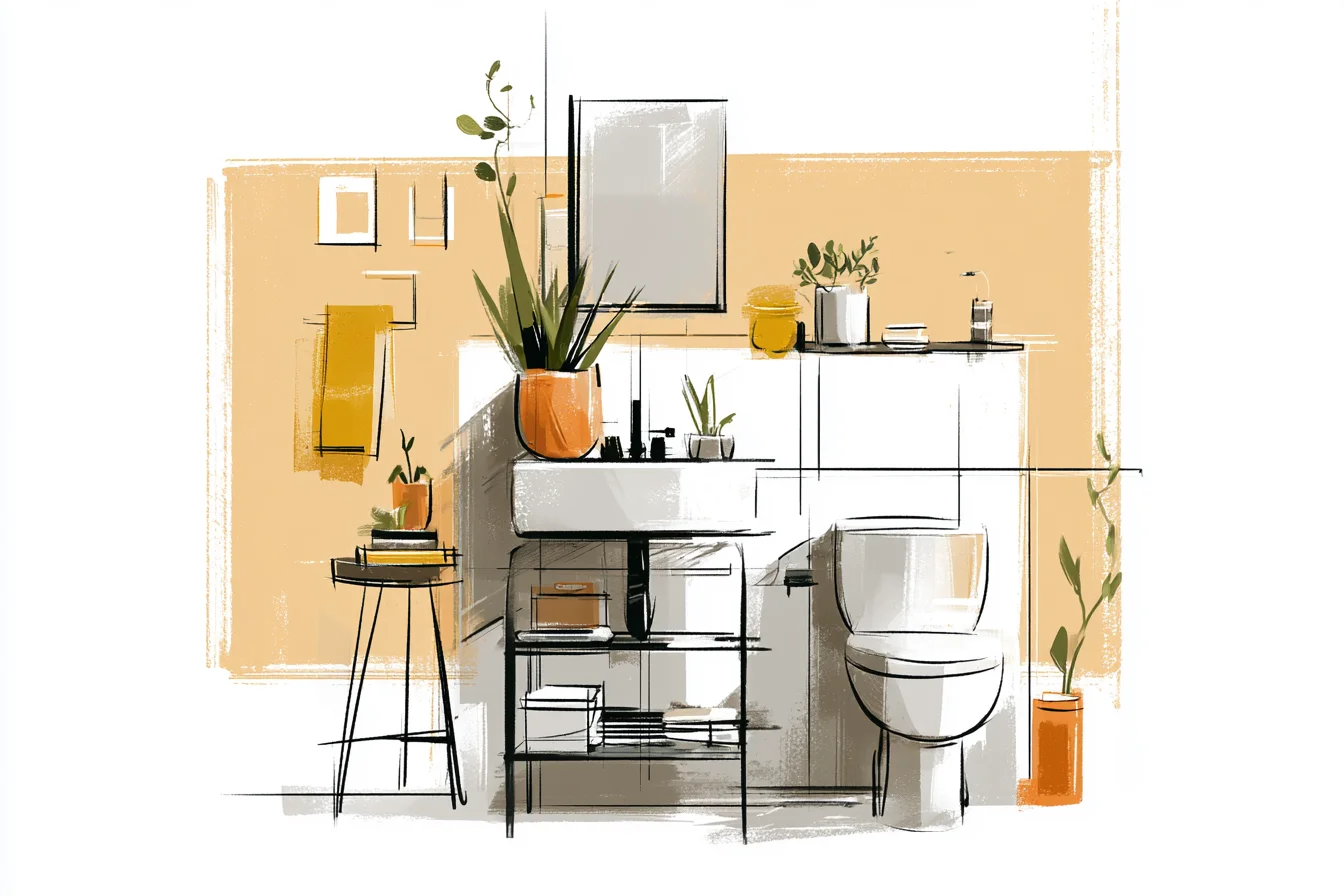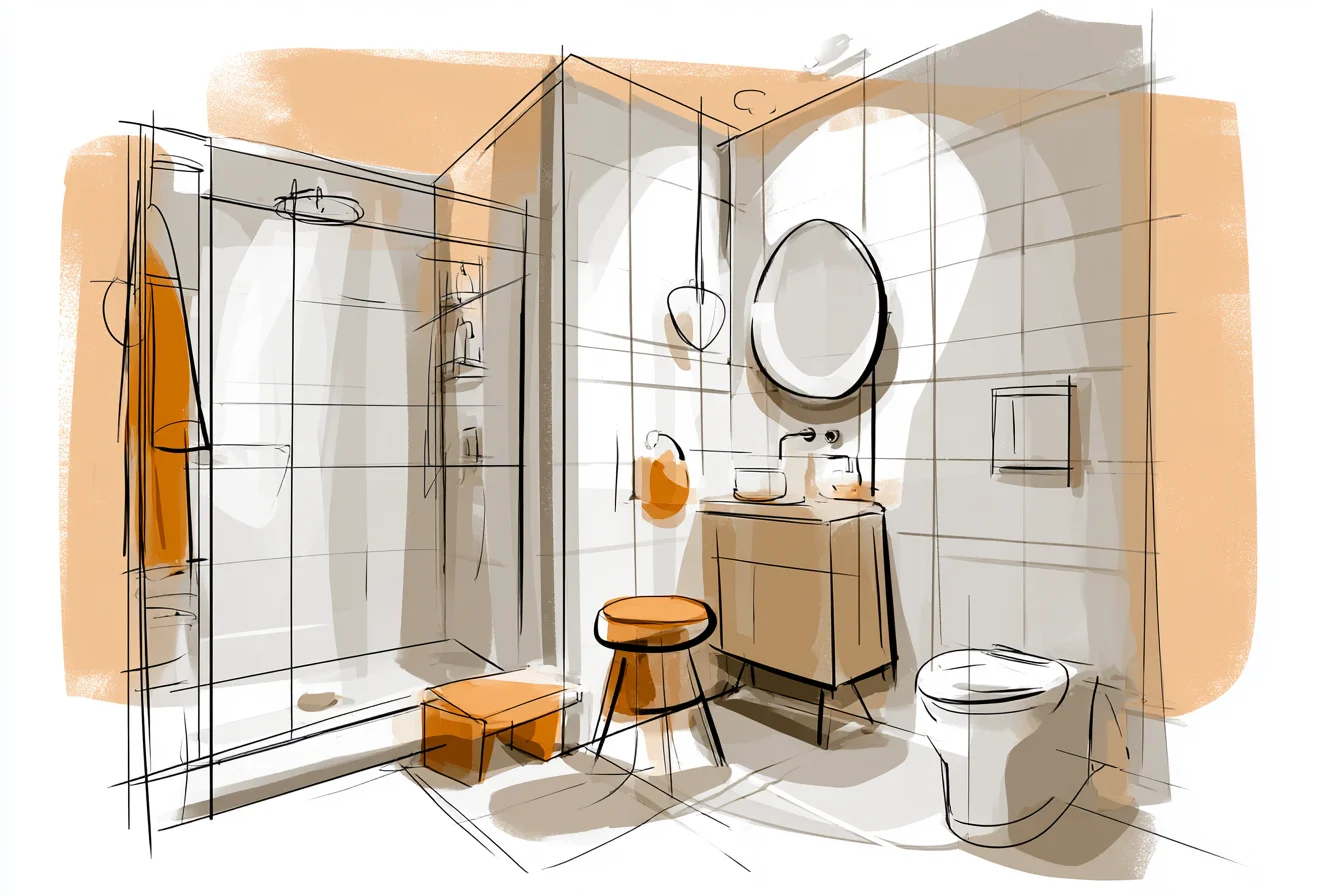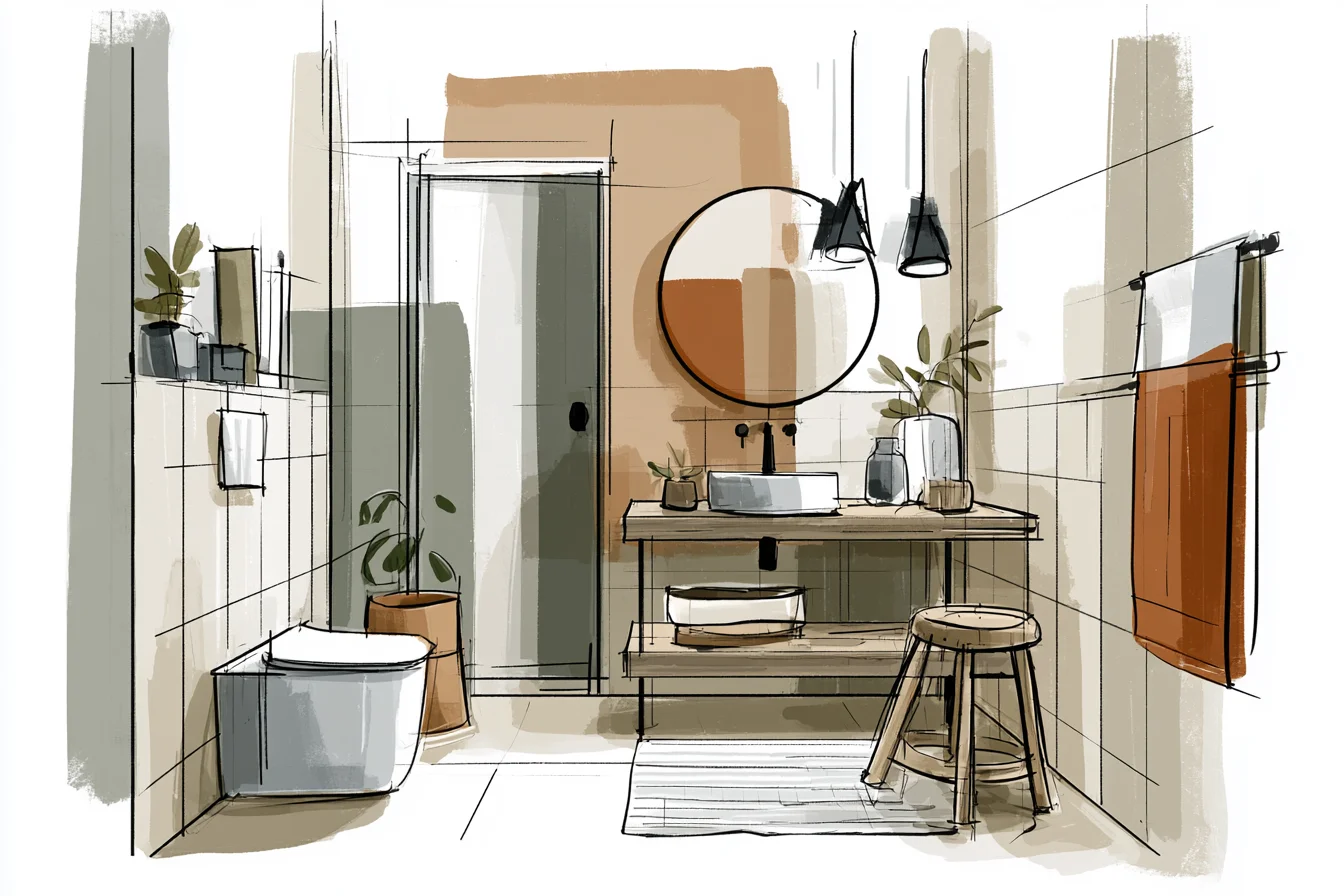
Last month I was in my friend Sarah’s bathroom when it dawned on me just how ridiculous her bathroom doorway situation was. She had to shimmy sideways to get around the door every time someone needed to get into the bathroom because the door opened right into the hallway and her teenage son’s basketball jerseys took up residence there constantly. “There has to be a better way,” Sarah sighed. And you know what?
She was right. As I thought more about Sarah’s dilemma, I started thinking of all the bathroom door nightmares I’ve experienced in homes over the years. The very first rental house I lived in had a bathroom door that opened into…the bathroom.
Yes, that’s how helpful that idea was. So if you left towels on the floor (and you always did), you basically couldn’t open the door.
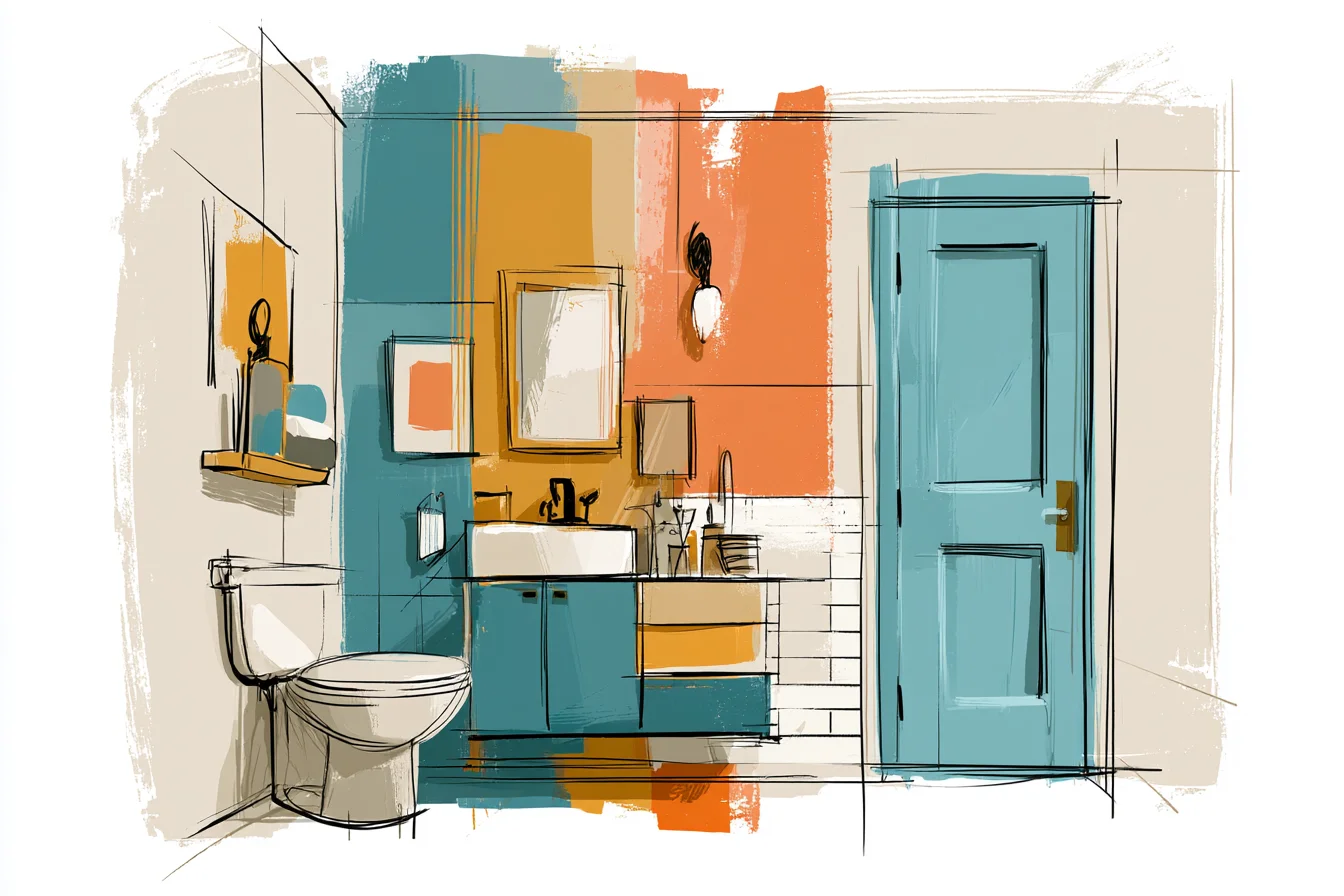
Fast forward a decade or two and I’ve tried nearly every door solution out there.
Well, maybe not every. But some definitely worked and some definitely didn’t. Let me walk you through the options.
Pocket doors have been around forever, and for good reason. They’re magical. There’s something so zen about a pocket door just sliding right out of your way.
I installed one on my master bathroom renovation two years ago and was blown away by how much more floor space I suddenly had. I could actually open my linen cabinet without performing some sort of gymnastics routine with the bathroom door! Here’s the thing about pocket doors though…they’re great if they work correctly.
But when they start acting up, you could be left ripping out part of your wall to gain access to the problem. The track that your door slides on has to be installed perfectly (and we’re talking millimeter here people) or you’ll have major issues with your pocket door sticking, jumping, or screeching every time you try to open it. Believe me.
I watched my neighbour attempt to install his own pocket door and it sounded like someone was taking a freight train towards our neighbour’s guest bathroom every time anyone entered or exited the room. Pocket doors work best when the bathroom has an internal wall that isn’t shared with any plumbing behind it. You’ll also need about 5-6″ of space within your wall cavity for the door to slide into, which eliminates many older homes that have very little space between interior walls.
And let’s be honest…if you rent, you’re out of luck. Barn doors are so trendy right now. I love them in pictures.
I love the rustic barn door hardware. I love watching them effortlessly glide back and forth. I’ll even admit that Instagram probably influences this a little bit.
The problem with barn doors in bathrooms, though, are a few things most people don’t consider until it’s too late. Barn doors don’t close completely at the edges, which means there’s privacy to sound, and sometimes even sights and smells. Unless you want everyone to hear everything (and see everything) going on in your bathroom, you might want to rethink the barn door.
Well, at least the traditional style barn door. I recently stayed at a cute bed-and-breakfast that had beautiful barn door leading into the bathroom. It wasn’t until mid-shower that I realised EVERYTHING we did in there could be heard throughout the main bedroom.
Not cool. If you’re dead set on having that barn door feel, look for barn doors that are specifically made for bathrooms with a tighter seal around the edges. Or only use them for powder rooms where privacy is less of a concern.
You Might Also Like
And don’t cheap out on your barn door hardware. Unless you want it to start sagging and binding within months, invest in some quality pieces that are made to withstand the daily grind. (See what I did there?) Because normal hinges just aren’t designed to be used on a vertical surface all day long like barn door hardware is. At this point sliding doors, or more specifically the modern take on sliding doors, have become my favourite solution for most bathroom door problems.
Why? They save you space like a pocket door would, but don’t require you to tear into your wall! Sliding door tracks mount right on your existing wall, so installation is easy and doesn’t take much upkeep.
I’ve installed them in two separate bathrooms in my own home and both have worked flawlessly. The first bathroom was in a small hallway bathroom that opened up to our bedroom. A normal door would basically block someone’s path to our bedroom whenever that bathroom door was open, but the sliding door eliminated that problem!
And because the door slides along the wall (instead of into it like a pocket door does) I didn’t lose any space on my wall for towel bars or artwork. Since the track is mounted on your existing wall, you do need to make sure you have enough clearance on either side of the door to mount the track and allow the door to slide completely off the opening. Most people underestimate this and end up with doors that don’t fully open.
Bifold doors are kind of the lame cousin of the slider, but they work well in spaces that you need the door to open but don’t have the room to allow for a door to swing out all the way. In my home, I used them for a small guest bathroom where the space was so tight that any door would have felt claustrophobic. They simply fold up beautifully and give the illusion of more space.
Okay, hear me out. Bifold doors are incredibly boring and resemble your closet doors more times than not. However, if you’re looking for a functional way to hide a problem and don’t really care about making a design statement, bifold doors are the way to go.
And they’re fairly inexpensive too. This door option is more conditional than the others. French doors or double doors work great in larger bathrooms, particularly master suites.
Whenever I see them done right, they really open up the space and feel incredibly luxurious. But you have to have the room both inside and out of your bathroom to make them work. They pretty much exclusively work in larger homes that have expansive master baths.
One mistake I see a lot are homeowners who see the bathroom layout they’re dealing with and immediately discount door options. For example, my friend Sarah thought she needed a pocket door just because her bathroom opened into a hallway. Once we measured properly, it ended up that a sliding door was the perfect solution for her and the traffic flow in that hallway was instantly better.
Before you decide on an alternative solution for your bathroom door, spend some time thinking about how you use your space.
When do people need to get in and out of the bathroom? Do you have the height?
The width? What’s your privacy needs like? Answer those questions and you’ll be way closer to finding the door that’s perfect for your particular situation.
Design aesthetics are nice and all, but will you actually use your bathroom if it works for you? Price wise, pocket doors are almost always going to be your most expensive option because they require professional installation. Barn doors come in next, assuming you don’t try to DIY them (you shouldn’t) and buy bathroom-specific hardware.
Sliding doors and bifold doors can usually be done on the cheap if you’re willing to do some of the work yourself. No matter what door you decide on for your bathroom, make sure it’s the right fit for you and your family. Sometimes that’s going to be a statement barn door, and sometimes that’s going to be a sliding door that nobody cares about.
But if it works with how you live and how you use your space, you’ve made the right choice.