You know that dry-mouth feeling when you wake up at 3am feeling like you’ve been breathing sawdust all night? Yeah, I lived with that for months before I finally admitted my bedroom air was basically a desert. My flat’s heating system is… well, let’s just say it’s enthusiastic.
Come winter, the radiators turn my cozy space into something resembling a sauna minus the relaxing steam part. I’d been eyeing humidifiers for ages but kept getting overwhelmed by all the options. Giant tank models that looked like medical equipment, ones with more buttons than my coffee machine, and those weird ultrasonic things that promised to fill your room with “spa-like mist” (spoiler: they mostly just made everything damp and weird).
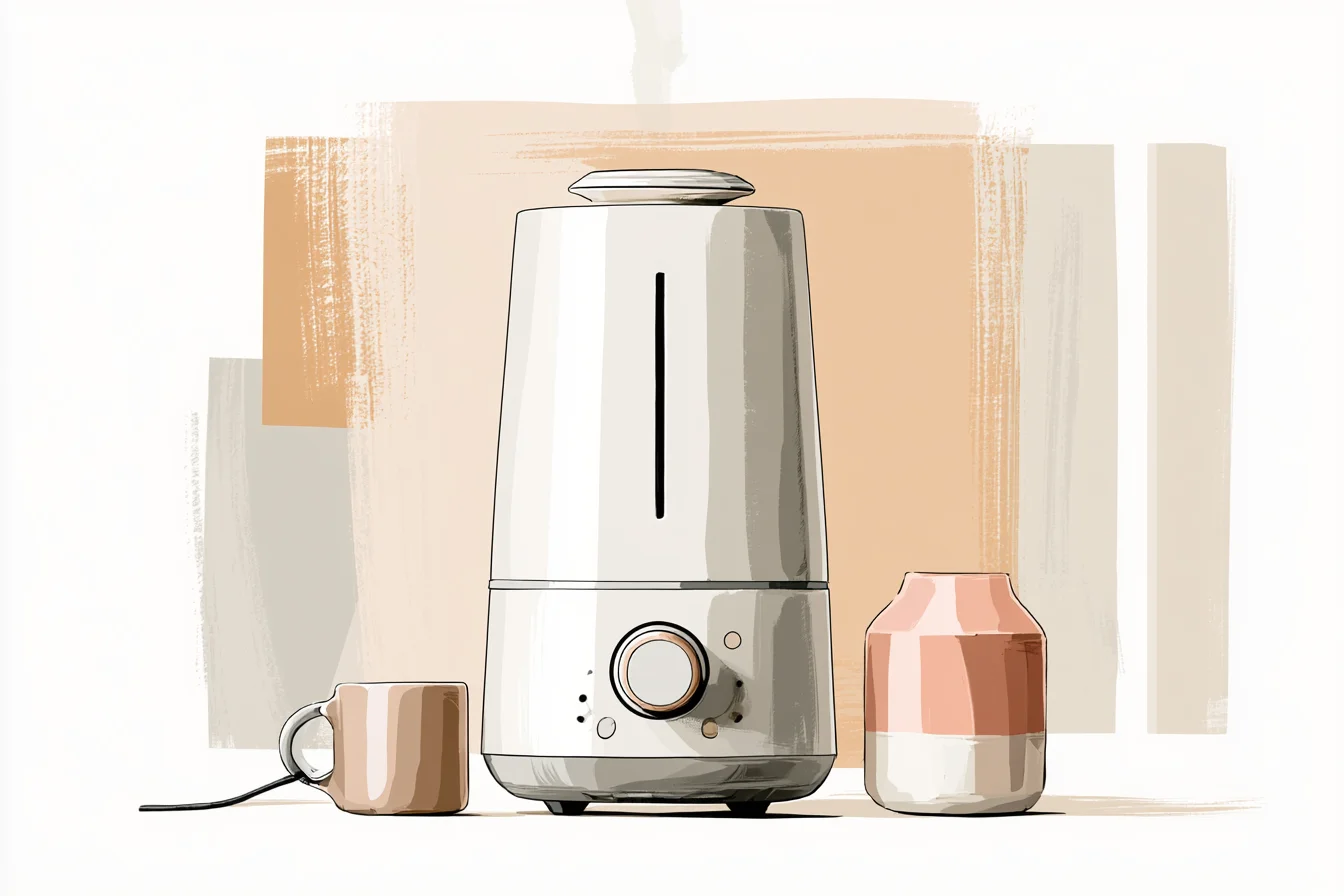
What I really needed was something small enough to fit on my already-crowded nightstand without looking like I’d moved a small appliance store into my bedroom. After spending way too much time reading reviews and arguing with myself about whether I really needed another gadget, I settled on this compact ultrasonic humidifier that’s about the size of a large coffee mug.
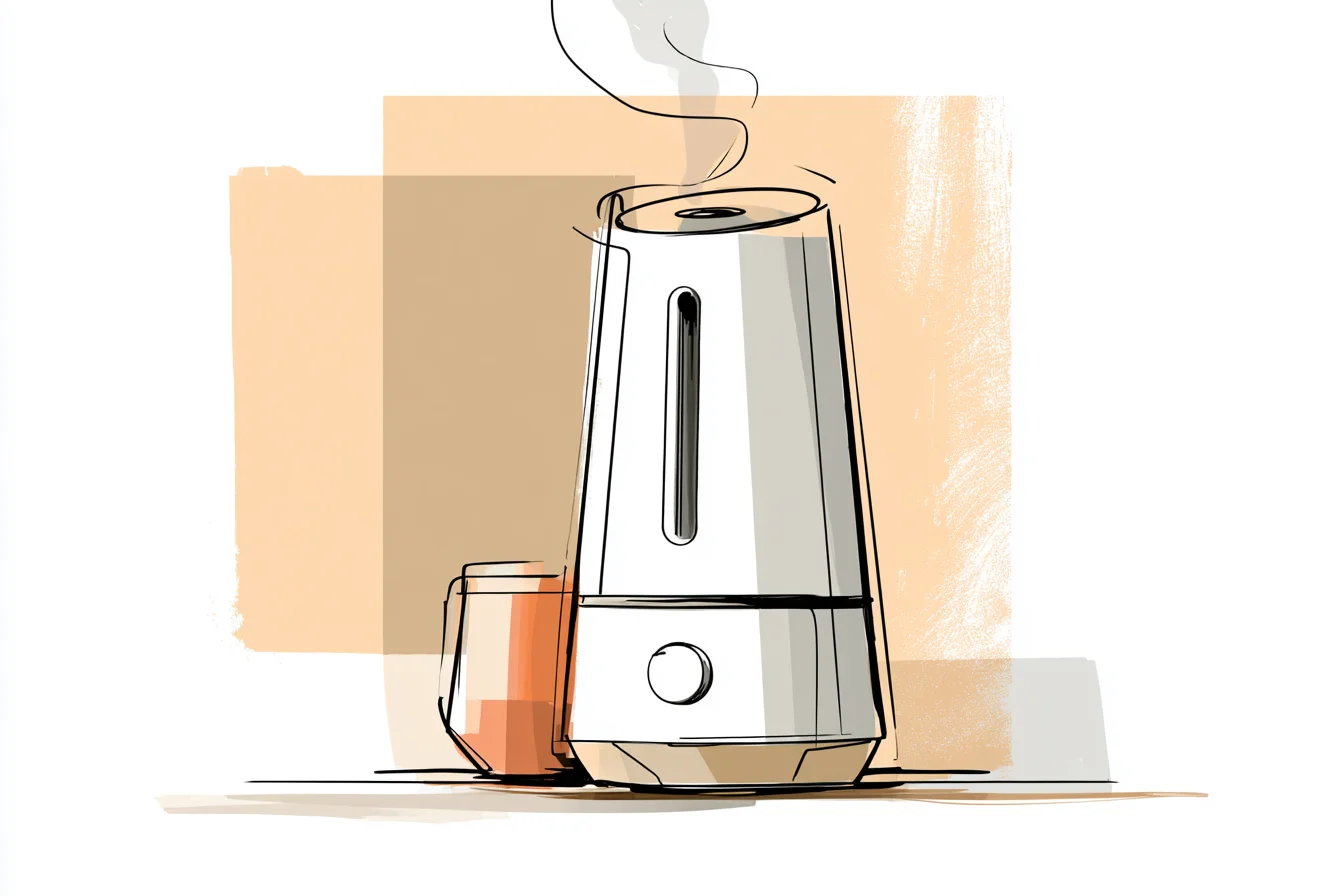
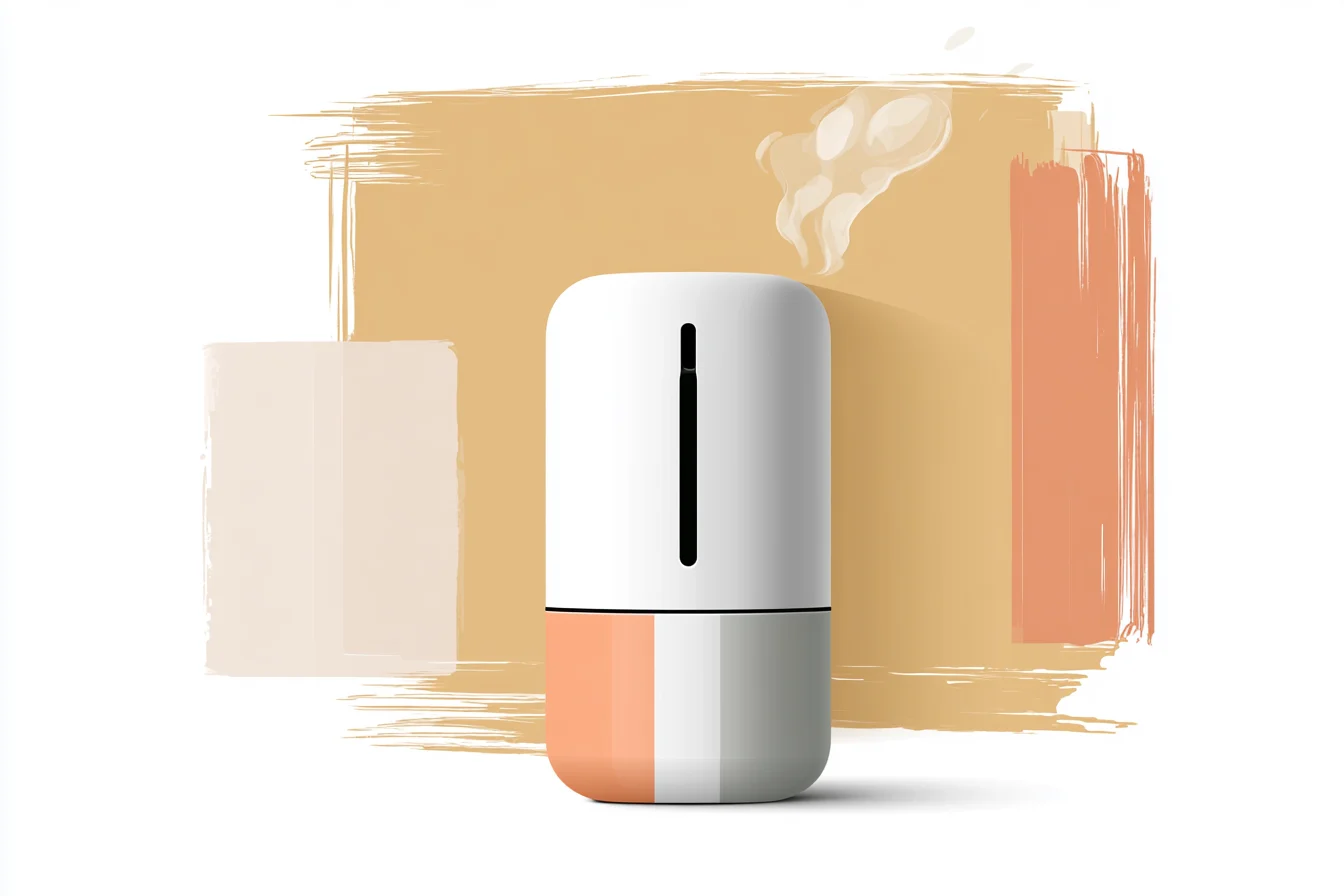
Nothing fancy – just a simple white cylinder with a water tank that holds maybe 300ml.
Cost me around thirty quid, which felt reasonable for something that might actually help me sleep through the night without waking up feeling like I’d been mouth-breathing in the Sahara. The first thing I noticed was how quiet it is. I mean, properly quiet.
My old fan makes more noise, and that’s saying something because it’s practically silent. This little humidifier just sits there doing its job with maybe the faintest whisper of sound – nothing that would wake you up or compete with whatever podcast I’m falling asleep to. The LED light can be turned off completely too, which was crucial because I’m one of those people who gets annoyed by any little glowing dot in a dark room.
Setting it up was stupidly simple. Fill the tank with water (I use filtered because our tap water is pretty hard and I didn’t want mineral buildup), plug it in, press the button. Done.
It runs for about eight hours on a full tank, which covers me from bedtime until morning without needing a refill. The mist output is adjustable – I keep mine on the lower setting because my bedroom’s only about ten by twelve feet and I don’t want to recreate London fog in there. What surprised me most was how quickly I noticed the difference.
Within a couple of nights, I wasn’t waking up with that parched throat feeling. My sinuses felt clearer in the mornings, and I stopped doing that unconscious mouth-breathing thing that apparently happens when your nasal passages get too dry. Even my skin seemed less tight and flaky around my nose and lips – an unexpected bonus I hadn’t really thought about.
The moisture level in my room went from feeling like a dust bowl to something actually comfortable. I don’t have a proper hygrometer, but I can just tell by how the air feels when I breathe. Before, it was like inhaling paper.
You Might Also Like

Now it feels… normal. Like air should feel. Maintenance is straightforward, which matters because I’m definitely not the type to remember complex cleaning schedules.
I empty and refill the tank daily (or whenever I remember, which is usually every other day if I’m being honest). About once a week, I give it a proper clean with white vinegar to prevent any mineral buildup or bacteria growth. The whole thing comes apart easily – just the base unit and the water tank – so there aren’t any tricky crevices to worry about.
I’ve been using distilled water recently instead of filtered, mainly because I got paranoid about mineral deposits after reading horror stories about people’s humidifiers turning into science experiments. The distilled water costs a bit more, but a gallon lasts me nearly two weeks, so we’re talking maybe a couple of pounds per month in running costs. The size really is perfect for what I needed.
It sits on my nightstand next to my lamp and phone charger without crowding everything else out. The minimalist design doesn’t clash with anything, and because it’s small, I can easily move it if I need to dust or rearrange things. I’ve even taken it with me when staying at friends’ places – just unplugs and fits in a weekend bag without taking up much space.
One thing I wish I’d known earlier: the first few nights, I ran it on the highest setting because more mist seemed better, right? Wrong.
I woke up to slightly damp sheets and that clammy feeling you get in overly humid rooms.
Had to dial it back to find the sweet spot where I get the benefits without turning my bedroom into a tropical greenhouse. The timer function is handy too. I usually set it for six hours, which means it shuts off automatically in the early morning hours.
This prevents over-humidifying and means I’m not running it unnecessarily during the day when I’m not in the room. Would I buy it again? Absolutely.
It solved the specific problem I had – dry bedroom air disrupting my sleep – without creating new problems like noise, excessive humidity, or taking over my limited surface space. Sometimes the simplest solutions really are the best ones. My throat thanks me every morning, and honestly, that’s worth thirty quid of anyone’s money.
For a small bedroom humidifier, this one ticks all my boxes: quiet, effective, easy to maintain, and doesn’t look like medical equipment. Sleep definitely improved once I stopped waking up feeling dehydrated.