I hate wasted space. Well, actually. There are lots of things I hate about most American houses, but wasted space is up near the top of the list.
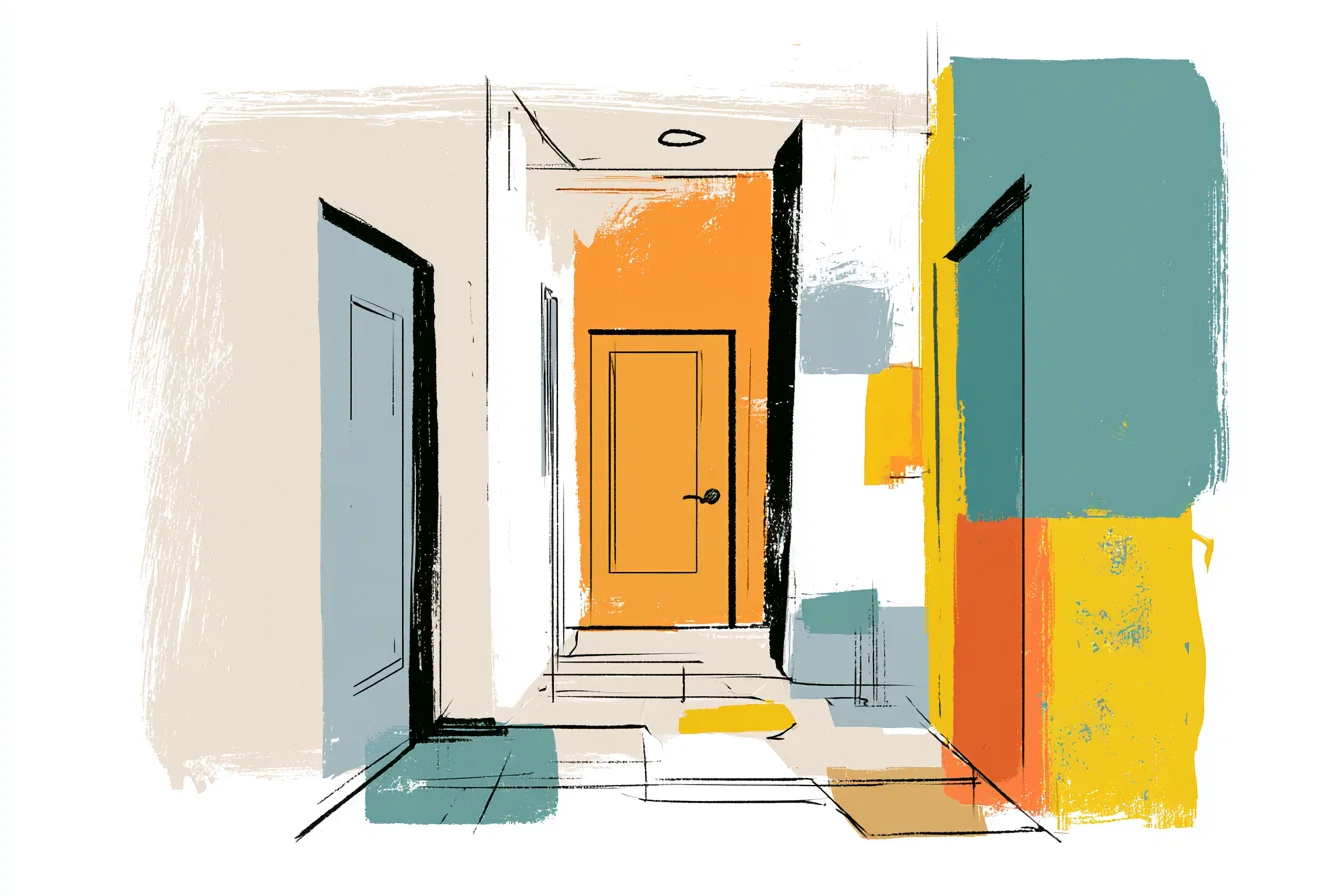
We have hallways in our homes that we traverse multiple times every day, and yet we treat them like blank slates, nothing more than interior pavements. Empty space to get from one room to another. The first couple weeks we lived in our teeny tiny Montavilla bungalow, we treated the hallway like that too.
It was a perfectly acceptable hallway connecting the living room to the two bedrooms, but that’s about all it did. Nothing on the walls other than the smoke detector and some nail holes leftover from who knows what decorations previous owners had hung.

It wasn’t until we started to settle into the space a little bit that I got peeved.
Why were we allowing precious square footage of our home to be wasted like this? We pay property tax on every inch of this house, including the hallway, so why shouldn’t it earn its keep rather than just being a place where we awkwardly squeeze past one another while lugging laundry baskets? ? I knew I wanted to transform our hallway when I found myself grading essays on the floor.
It clicked during winter break last year. I was grading essays – hundreds of pages of essays – and my dining room table was literally covered in student papers. The coffee table was covered in student papers.
So I sat on the floor in our hallway because there was nowhere else to put myself and my mountain of essays. And I looked around and thought, “This is nuts. This space could totally work.” Our hallway is not a big space.
At most, it’s around four feet wide and maybe eight feet long. It has good ceiling height and gets some indirect natural light from the living room, but the prior owners had put down this vile tan shag carpet and underneath that was the fir flooring we uncovered elsewhere in the house to match. That was clue number one that we could make this space work.
I started noticing hallways when I was in other people’s homes. Homes that were similar aged to ours or in similar neighbourhoods. Turns out some old Portland homes have some pretty spacious hallways.
Specifically, bungalows from the 1920s. Many of these homes have hallways that are generous enough to allow for furniture or built-ins without feeling crowded or closed off. Back then, builders didn’t feel the need to make bedrooms as large as humanly possible at the expense of everything else.
Nobody was wheeling rolling racks down hallways balanced with bundles of fabric, I guess. Anyway, first things first. I hung some of my students’ best creative writing pieces along one wall of the hallway.
Not because I’m narcissistic enough to cart work home from school to show off to friends and family (okay, fine, maybe a LITTLE because of that) but because I wanted to see how the space would feel with some sort of visual stimuli. Wowza did that hallway come alive when we had something actually happening on the walls instead of bland paint! That got me thinking.
What else could we add to this space without making it feel cramped? Spring break came, and we yanked up that gnarly carpet (turns out there’s like a million staples embedded in your floor underneath that plus all the adhesive padding that you have to pick off with a chunk off your thigh) and refinished our hardwood floors. I painted the walls the same warm white we did in the living room to help tie everything together.
All new stuff totaled up to about $150 in materials, and we definitely suffered for it over that one weekend when we were both sore and filthy all over. But damn if it wasn’t worth it. This extra decorating real estate in our hallway allowed us to store stuff that wasn’t necessarily able to fit anywhere else.
As teachers, Bryan and I accumulate books and supplies and papers and who knows what else we think we’ll “need” one day for lesson planning. Our bedroom closet was already jam packed, and the second bedroom basically served as our catch-all junk room for everything else that didn’t have a place to live. Hallways, though.
Measure twice, cut once. Our hallway was just narrow enough that we could probably squeeze some sort of skinny storage unit against one wall without it feeling too closed off or blocking traffic. As far as traffic went, we needed at least three feet of clear space for people to walk through without brushing up against whatever we put there.
That left us with, maybe, twelve inches to play with on the other side of the hallway. Bryan wanted to build built- ins, which would have looked amazing but were totally not in the budget. We found these IKEA bookcases that were almost the exact width we needed and had to trim them down just a smidge to fit the ceiling height.
Nothing major. Painted them the same white as the walls, installed some cute trim pieces to make them look more built-in. BAM!
We suddenly had shelving for all my teaching books and paperwork, off season clothes, extra linens… crap that was cluttering up every other room in our house now had a place to live! If you look at old houses, a lot of times the builders assume you’re going to actually USE your hallways. The proportions are usually generous enough to fit furniture or storage without feeling cluttered.
It’s really only been within the last few decades where we’ve turned our hallways into these narrow little speed lanes that are as small as possible. I started seeing hallways everywhere. When I’m at my parents’ house in Eugene they have this great upstairs hallway that’s probably five feet wide – it has SO MUCH ROOM – but it just kind of goes to nowhere.
It serves one purpose and that’s to get you to the bedrooms. My friend Sarah lives in this adorable Laurelhurst tudor and has a hallway that’s basically its own square footage-wise. It just has one of those console tables with a lamp on it.
Waste of space! ! The key to me understanding hallways was traffic flow. You can’t just randomly put furniture in your hallway without considering how people will actually move through your home.
You Might Also Like
In our case, our hallway connects our main living area to the bedrooms AND the bathroom so there’s a decent amount of foot traffic that uses this space. The tricky part is that majority of the traffic flows along one side. People have a tendency to walk closer to the wall that doesn’t have doorways cutting through it.
That left us the entire other side of the hallway free to do whatever we wanted without getting in the way of daily life. If we had put our IKEA bookcases on the bathroom doorway side of the hallway, we would have been hitting them every time we used the restroom. Or having to squeeze past each other like creepers just to get from the living room to the bedrooms.
Lighting is another thing I can’t believe we lived without. Remember that horrible beige builder grade can light that covered our hallway when we moved in? We dumped that bad boy and hung this simple pendant light that casts so much better light than what we had before.
It actually looks intentional rather than, y’know, security garage footage. I also added a lamp on top of one of the bookcases, plugged into an outlet that was already conveniently located. It sounds insignificant, but that warm light at eye level instead of overhead really helps make the hallway feel more… enjoyable to be in.
Like you might actually want to stand and linger there for more than five seconds. Once we conquered the hallway, I started looking at other transition spaces in our home. Why do Americans assume every square inch of their home has to be a defined “room” with this one purpose??
The living room, the dining room, the hallway. Back when houses were built with actual craftsmanship they were designed so these areas flowed together and served multiple functions. I find myself looking at friends’ and family members’ homes and spying on their hallways.
My coworker Jenny lives in this cute brick house near Cathedral Park and has this HUGE upstairs landing. It’s bright, gets good natural light, and is pretty isolated from the main areas of the home where people gather. But she uses it for storage.
Boxes piled on the landing so high you trip whenever you go up or down the stairs. Seasonal decor she just throws up there and forgets about all coming down from the ceilings. Her entire SECOND floor is cluttered with junk just because she doesn’t utilise that hallway/landing area to its fullest potential.
Hallway projects are kind of the gift that keeps on giving when it comes to home renovations. They usually don’t require any crazy plumbing or electrical work (we actually added a light fixture so there was some of that, but hear me out!) and since the spaces are typically small you don’t need to break the bank on materials and furnishings. Our entire hallway cost, maybe, $400 and took us about three weekends to fully complete.
Compared to kitchens or bathrooms that can run you into the thousands and take MONTHS to complete, hallways are the perfect beginner project to dabble in during your home. Make a big impact without breaking your bank account or disturbing your daily life for weeks on end. Hallways are also great for display areas.
As an English teacher I’m constantly thinking about how stories are laid out and how to keep readers interested as they go from one chapter to the next. I love that we have this space in our home where we can display artwork (student art? Anyone??) and photos that we can peruse as we walk through the main area of our home.
I didn’t want to go too crazy with shelves or anything in our hallway because I wanted to be able to swap things out or move things around easily. Some floating shelves and these awesome picture ledges from Ikea allow me to change things up seasonally or whenever I just want to update the vibe of our hallway. It functions as this constantly evolving art gallery that I walk by multiple times a day.
One thing I’ve noticed since moving into our home is we don’t have a lot of connecting space between indoors and out. Our hallway doesn’t have any windows, but it does connect to both our front and back door. What’s everyone’s downfall when entering their home?
Coats, bags, keys, mail… why do we just allow all that junk to pile up wherever the heck we drop it? (Hint: mostly dining room table for us.) Maybe if we utilised this hallway space some DIY magic could occur there too. Funnel all of our outdoor clutter into a hallway “drop zone” that might actually prevent heaps of junk from being left on the kitchen counters. THAT will be a summer project for sure.
If there’s one thing that converting our hallway taught me, it’s that we Americans are incredibly wasteful with our square footage. We see oversized rooms for entertaining we’ll use six times a year and neglect the areas we use every.single.day. Think about the rooms you walk through to get to those big spacious rooms.
Front porch/hallway entries, upstairs landings, inside hallways. All these spaces could make your day to day life so much more functional. Now I know not every hallway is going to have the same natural perks as ours.
Really narrow hallways? Might be a tough sell to work with what you’ve got. But I bet if you stopped to really look at your home, you’d find at least some dead space in your circulation areas that could work harder for your home.
What was great about our hallway transformation was we didn’t HAVE to do everything at once. We didn’t rent a giant dumpster and go “SYSIPES” our entire hallway until it felt like ours.

We didn’t have to rip out all the flooring or spend money we didn’t have to remodel.
Every small change we made allowed us to live with it and adapt to it before deciding if we wanted to keep going in that direction. Live with that tan shag carpet awhile to decide if you actually wanted hardwood floors or just painted the walls to make sure you weren’t sick of white 😂 It’s kind of the same mentality I have when giving spaces in my home a makeover. Start small.
Paint? Add some lighting? See how you feel about the space then work from there.
Because if you dive into hallway renovations blindly there’s just as much potential to hate it as you love it. You won’t know your household habits until you live with the changes. Our hallway used to be so blah.
Now it actually keeps us organised plus looks pretty amazing too. 😉 Whenever I walk through now, I’m reminded that you don’t have to do Carson Daly DIY makeovers to your house to make it your home. You just have to open your eyes and think outside of the four chalky white walls.