Moment of truth. One fine day last year I was visiting my friend Carmen and watched her struggle to grab a large serving platter from her upper cabinet. There she stood: butt perched atop her counter precariously balanced with one knee holding her up and arm extended above her head like some Olympic reaching event.
At that moment when she finally grabbed said platter from her pantry canopy, I thought, “What in the world are we doing jumping around like clumsy monkeys just to retrieve our dishes?” Up until then I never questioned kitchen cabinet conventions. I figured there was a good reason that upper, wall-mounted cabinets are as omnipresent in kitchen designs as drains in sinks. But then it dawned on me: Everything I’ve ever read about kitchen design is backwards.
Who decides that the things we use every day should be suspended out of reach from the culinary tragedies of our weakest third? After quitting my job as a medical assistant (which incidentally led to more time in my kitchen), I noticed how much I disliked reaching into my upper cabinets.
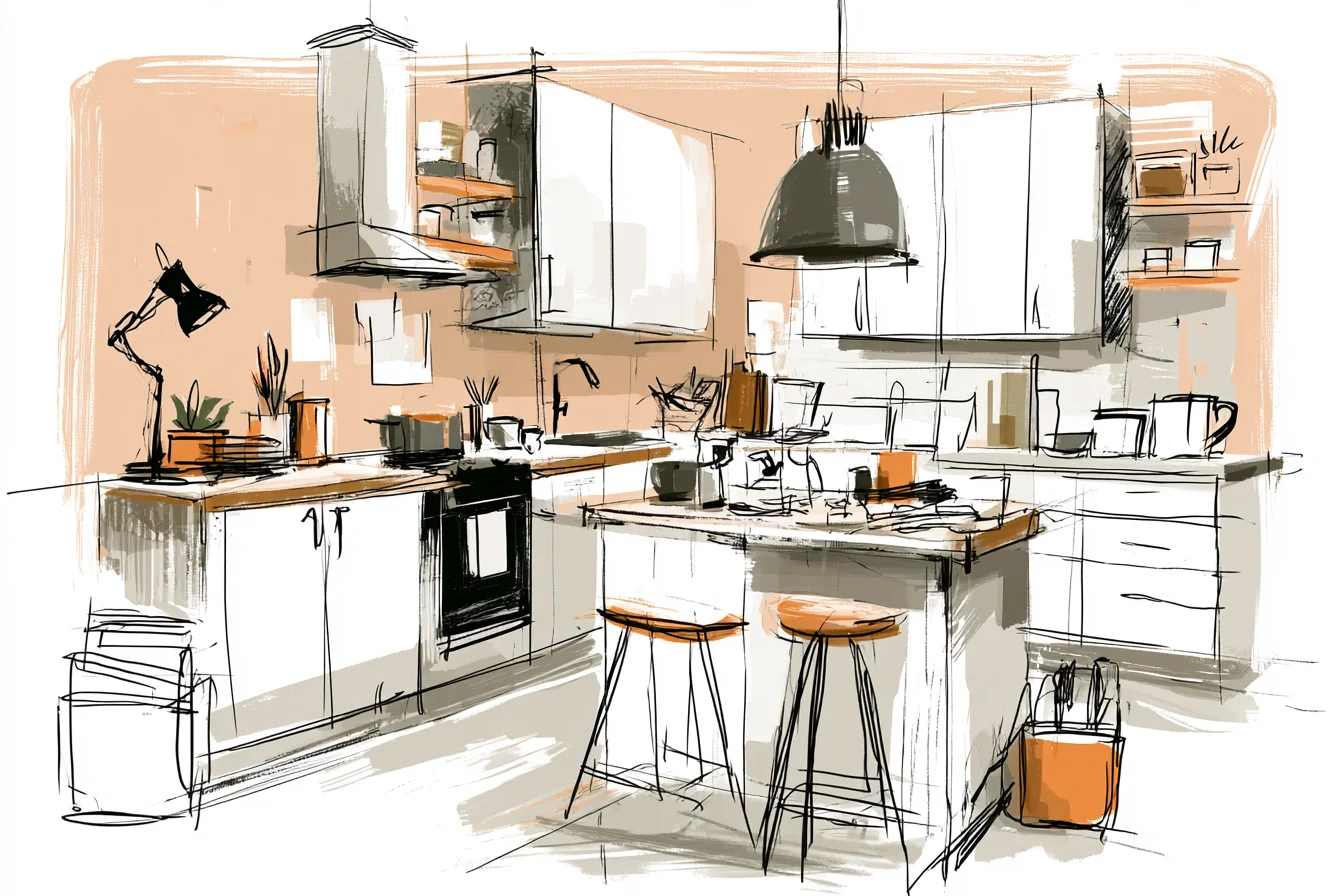
When we moved into our house seven years ago, my husband built plain-Jane, white cabinets from Home Depot kits – the kind of cabinets that come standard in every house.
I admit that I didn’t use half the space because anything stored up high was essentially obsolete. Those annoying cramped shelves became repository for mystery goods and forgotten treasure. Soon after spying Carmen reaching for her plated treasures I began researching kitchen storage alternatives.
Turns out, there’s a whole world of kitchen cabinetry that doesn’t involve mounting boxes to your walls. Believe it or not, some of the alternatives have been around for decades. Think: Grandma’s hutches and open shelving.
If they made those work back then without breaking the bank, why not today? I started by removing the upper cabinets above our kitchen’s main peninsula. My husband thought I was nuts. “Where are you going to put stuff?” he’d ask.
Valid question. But upon closer inspection of what was actually tucked away in our cabinets, much of it was junk we didn’t need. Old wedding gifts from eight years ago, duplicate bowls, infrequently used serving dishes.
Those awkward cabinets got replaced with two shelves made out of reclaimed wood that my husband’s friend Mike had lying around. Cost us maybe sixty bucks versus several hundred for new cabinets. I placed everyday dishes and glasses on the bottom shelf and coffee mugs and aesthetically pleasing bowls on top.
Within seconds I could see everything and reach everything without a bulky cabinet blocking valuable counter space. It also made our kitchen look and feel twice as big. Okay, hear me out.
I get it. Open shelving isn’t for everyone. One of my sisters is anti open shelving.
She likes her things hidden behind cabinet doors. But open shelving made me use pretty dishes and serving pieces more often. Instead of grabbing those boring white-core lunch plates every time, I entertained with real china.
With cabinets, it was too easy to forget about things shoved in the back corner. But now with open shelves, everything is visible so you remember what you have. And if you don’t use it, donate it!
Learning tip: You can’t just stick dishes haphazardly on open shelving and call it stylish. I had to corral my clutter. Not a bad thing.
I started using matching storage containers for my pasta, rice, etc. I put like items together which forced me to edit out unnecessary items I didn’t need. Kitchen storage made me organised.
You Might Also Like
My neighbour Rosa loves her upper cabinets but gave some up for a rail system she found at IKEA. It’s basically metal poles mounted to the wall with hooks and shelves hanging from them. Super helpful when storing cooking utensils and spices.
And much less expensive than customised cabinets. You can re-arrange hooks and shelves whenever you want. Her husband is tall and can reach the highest pole spots.
But all of her everyday items are at eye level. Love the idea of turning furniture into kitchen storage. Scored this beautiful vintage hutch at an estate sale for $200, cleaned it up and placed it in my dining nook adjacent to the kitchen.
It stores all my serving pieces, cloth napkins, candles and holds stuff that was previously stored in high-up cabinets I couldn’t reach. Psych! (And please forgive the mirror that reveals every pile of junk.) Friends often compliment our kitchen and ask if we are “renovating.” Little do they know half the changes evolved from pure aggravation. For example, we make a lot of Mexican food.
So we needed to stash different kinds of chiles within reach. Quicker access to our masa harina, vinegars galore. Having these items visible and organised made cooking so much more fun.
Low cabinets: I’m converting as many as I can to drawers. Started with the main cabinet next to the stove. Removed those cheap wire racks that every cabinet comes equipped with and installed two deep drawers in their place.
Life changer when reaching for pots and pans. No more knees on the floor searching for the right lid or playing steak potato with a pile of skillets. Corner cabinet problems: grow like dandelions if you ignore them.
Ours was one of those stupid lazy susan spinning circular shelves. Things always got jammed. Entree half moons falling onto the unreachable floor abyss.
Enter hubby with his saber saw and poof! Gone! He cut the cabinet out and built two pull-out drawers that slide straight toward you instead of spinning like a pumpkin head on Halloween.
Heavy-duty drawer slides that are each rated to hold up to 100 pounds stuck to the wall for support. Maybe $150 in materials and a weekend of labour. What a difference!
That once useless nook of wasted space is now awesome coveted storage. Consider converting non-kitchen furniture for food storage. Picked up this old metal cart at a garage sale and painted it white.
It now lives in my kitchen Rolling spice and oil station fit perfectly between our fridge and the wall.

And I can roll it wherever I’m cooking instead of jamming everything into the skinny cabinet nobody can reach. Don’t forget industrial shelving.
This is something I’m playing around with for our basement prep kitchen. A chef friend of mine showed me industrial stainless steel wire shelves they use in restaurant kitchens. Incredibly sturdy and you can see everything.
Not cozy enough for most kitchens but awesome for bulk storage or if you’re going for that modern cooking show vibe. Lesson learned: Kitchen remodels can be crazy expensive, but you don’t have to replace every cabinet to improve your storage. Upper cabinets I removed would have cost me close to $3,000 if I hired someone to replace them.
Probably could’ve built them myself for half that. Compare that to the $400 I spent on shelving and organizers throughout our kitchen. Yeah, those conventional cabinets would’ve been easier, but everything I added works better for how we use our kitchen.